
Africa Must Unite Before the New World Order Divides It Further
From Nkrumah’s Unfinished Vision to a United Africa


Africa is entering a new and uncertain chapter of world history. The international order that emerged after the Second World War and hardened during the Cold War is changing. The period in which one superpower could exercise overwhelming global influence is giving way to a more competitive and increasingly multipolar world. The United States remains enormously powerful, while China has emerged as a major economic and strategic force, Russia retains significant military and geopolitical influence, India is rising rapidly, and the Gulf states and other Asian powers are becoming increasingly important players.
This transformation presents Africa with a historic opportunity. It also presents a serious danger. If Africa remains politically fragmented, economically dependent and militarily divided, the continent may once again become an arena in which powerful countries compete for influence, markets, resources and strategic advantage.
If Africa unites, however, it could become one of the principal powers shaping the new international order. That is why the unfinished project of African unity must be brought back to the centre of the continental debate.
The Unfinished Dream of African Unity
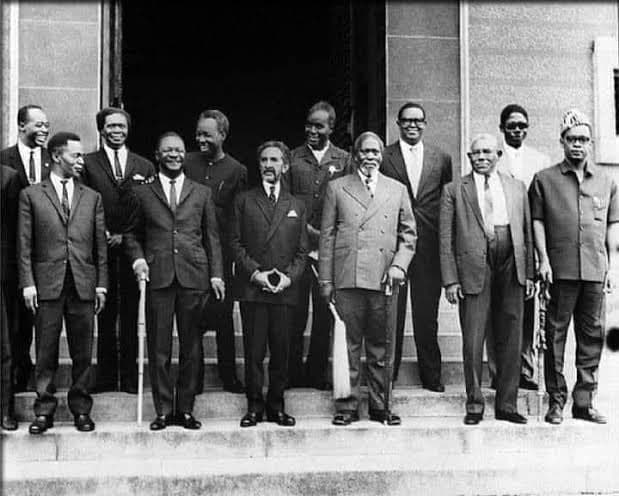
The idea is not new. In 1963, when independent African leaders gathered in Addis Ababa to establish the Organization of African Unity, Ghana’s first president, Kwame Nkrumah, argued forcefully for a much deeper form of continental unity. Nkrumah understood a fundamental reality: political independence without economic and political unity could leave African countries vulnerable to external pressure.
The creation of the OAU was a historic achievement. It provided a continental platform for newly independent states and helped advance the struggle against colonialism and apartheid. But the OAU did not create a single African political authority. The continent remained divided into sovereign states, each pursuing its own national interests and often negotiating separately with much larger external powers. More than sixty years later, the central question remains: has Africa achieved independence without yet achieving sufficient sovereignty?
The years following African independence coincided with the Cold War confrontation between the United States and the Soviet Union. Africa became an important arena in that global struggle. African governments were courted, pressured and sometimes destabilised according to the strategic interests of competing powers. Political movements and leaders who sought independent economic and foreign policies often found themselves operating in an international environment where the interests of great powers could profoundly affect domestic African affairs. The lesson should not be that Africa must choose one external power over another. The lesson should be that Africa must never again allow its future to depend upon the goodwill of external powers.
A Multipolar World: Opportunity and Risk
The collapse of the Soviet Union between 1989 and 1991 created what became a predominantly unipolar international system, with the United States occupying an exceptionally powerful position. That period is now changing. China’s rise, India’s growing economic and strategic weight, Russia’s continuing geopolitical influence, the growing importance of the Gulf states and the emergence of other centres of power are contributing to a more competitive international system.
For Africa, multipolarity could be beneficial. African countries may have more choices of development partners, investors, trading partners and diplomatic allies. Instead of depending excessively on one centre of power, African governments can potentially negotiate with several. But there is a dangerous assumption that must be rejected: multipolarity does not automatically mean equality. A world with several powerful countries can still be a world dominated by powerful countries. If Africa remains weak and divided, the continent may simply exchange one form of dependency for several competing forms of dependency. The objective, therefore, should not be to replace Western dominance with Chinese, Russian, Indian or any other external dominance. The objective must be African strategic autonomy.
Africa possesses extraordinary strategic importance. It has enormous mineral wealth, energy resources, agricultural potential, vast land, a young population, important maritime routes and some of the minerals required for the technologies of the future. This makes Africa increasingly important to the world’s major economies. But resources alone do not create power. The ability to control, process, trade and strategically use those resources creates power. For decades, many African economies have exported raw materials while importing finished products. Countries often compete against each other to attract external investment, even when they possess similar resources and face similar economic challenges. This weakens their bargaining position.
Imagine, instead, an African continent negotiating collectively over its minerals, energy, agricultural products, infrastructure and consumer markets. The bargaining power would be fundamentally different. A country negotiating alone with a global economic giant is not in the same position as a continental market negotiating collectively.
The rise of BRICS has intensified discussion about the future of the global financial system and the dominance of the U.S. dollar. For Africa, the debate is important. Greater use of African currencies, regional payment systems and alternative international settlement mechanisms could reduce some of the continent’s vulnerability to external financial shocks. But Africa must be careful. The purpose of reducing dependence on the dollar should not be to create dependence on another currency or another group of powerful countries. Africa should not simply move from one financial dependency to another.
The ultimate objective must be the development of African financial capacity: stronger continental financial institutions, deeper African capital markets, greater intra-African trade and payment systems that make it easier for Africans to conduct business with one another. The African Union’s own Agenda 2063 already places continental integration, economic transformation and Africa’s stronger position in the global arena at the centre of its long-term vision. The question is no longer whether the vision exists. The question is whether African governments will have the political courage to implement it.
The Danger of Great-Power Competition, and Why Unity Is Not Isolation
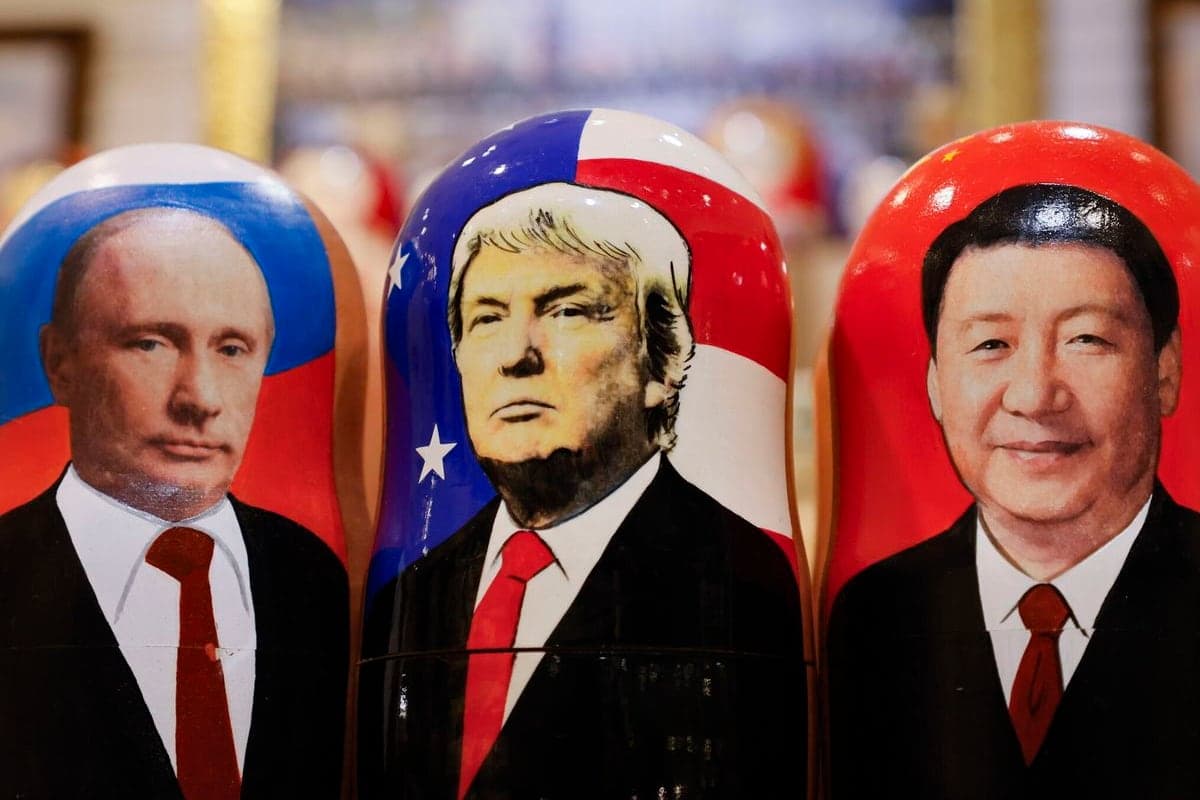
The coming decades are likely to be characterised by intense competition among major powers. The United States wants to preserve its global influence. China wants to expand its economic and strategic position. Russia seeks to maintain and extend its geopolitical influence. India is becoming an increasingly important global economic and political power. The Gulf states are expanding their investments and diplomatic reach. Europe remains a major economic and political actor. None of these powers is necessarily Africa’s enemy. But none should be assumed to be Africa’s permanent friend either. States pursue national interests. That is the normal behaviour of international politics. Africa must therefore learn to pursue its own interests with equal determination.
The right question is not “which great power should Africa follow?” The right question is: how can Africa cooperate with all major powers while remaining subordinate to none?
African unity should not be confused with hostility toward the outside world. A united Africa would still trade with Europe. It would still welcome American investment and technology. It would still cooperate with China. It would still maintain diplomatic relations with Russia. It would still work with India, the Gulf states and the rest of Asia. But the relationship would change. Africa would negotiate as a collective power rather than as a collection of vulnerable individual states. Africa should be able to say to the world: we will cooperate with you, we will trade with you, we will invest with you, we will learn from you, but we will not surrender our sovereignty to you. That should be the foundation of African foreign policy in the twenty-first century.
From Economic Integration to Political Union
The journey toward African unity does not have to begin with the immediate creation of one African state. That would neither be practical nor politically realistic. The process can be gradual.
First, Africa must build a genuinely integrated continental market. The African Continental Free Trade Area is an important step in this direction. Second, African countries must develop continental supply chains and industrial capacity: Africa should increasingly process its own minerals, manufacture its own products and add value to its agricultural resources. Third, Africa needs stronger continental financial institutions and payment mechanisms. Fourth, African states need substantially greater cooperation in defence, intelligence, border security and peacekeeping. Fifth, the continent needs stronger common diplomatic positions on issues that affect its collective interests. Only after these foundations are established should Africa seriously consider deeper political federation.
The European Union offers an important historical lesson. Europe was once a continent of competing states that had fought devastating wars against one another. Yet European countries gradually created common institutions, common markets and mechanisms for political cooperation. Africa can learn from that experience without simply copying it. Africa has its own history, cultures, languages, political traditions and circumstances. The objective should therefore not be to become another Europe. It should be to build an African system suited to African realities.
The European experience demonstrates one important principle: political unity does not have to happen in a single dramatic moment. It can be built step by step. Africa could follow a similar path. Economic integration can lead to stronger political cooperation. Political cooperation can lead to common institutions. Common institutions can lead to collective security. Collective security can lead to a stronger common foreign policy. And, eventually, African peoples may decide whether the continent should become a political federation.
Africa’s Diversity Is Not a Barrier to Unity
There are those who will say that Africa is too diverse to unite. But diversity is not the same as incompatibility. India is enormously diverse. China contains enormous regional, linguistic and cultural differences. The United States itself was formed from states with different histories and interests. The European Union contains nations with different languages, cultures and political traditions. The existence of differences does not make cooperation impossible. Indeed, Africa’s diversity may become one of its greatest strengths if it is organised within institutions capable of managing those differences peacefully. The question is not whether Africans are identical. They are not. The question is whether Africans share enough common interests to justify acting together. The answer is clearly yes.
Foreign powers will always compete. That cannot be prevented. What Africa can prevent is becoming permanently divided while others compete over its future. A fragmented Africa will continue to negotiate from weakness; a united Africa could negotiate from strength. A fragmented Africa will struggle to protect its strategic resources; a united Africa could determine how those resources are developed and traded. A fragmented Africa will find it difficult to defend its interests in global institutions; a united Africa could become one of the principal voices shaping those institutions. A fragmented Africa can be pressured individually; a united Africa would be much harder to ignore. This is why African unity should no longer be treated simply as an idealistic Pan-African dream. It is a question of survival in an increasingly competitive international system.
The African Century Will Depend on African Choices
Africa has spent the last century fighting for political independence. The next century must be about converting independence into genuine sovereignty. Sovereignty means more than having a flag, a national anthem and a seat at the United Nations. It means having the economic capacity to make independent decisions. It means having the industrial capacity to create value from African resources. It means having the financial institutions necessary to support African development. It means having the military and security capacity to protect African territory. It means having the diplomatic strength to negotiate with powerful countries on equal terms. And ultimately, it means having the political institutions necessary to allow Africans to decide their collective future.
The world is changing. The question is whether Africa will change with it, or whether other powers will once again determine the direction of the continent. Nkrumah’s generation fought to end colonial rule. This generation must complete the next part of that struggle. Africa must move from independence to sovereignty, from sovereignty to integration, and from integration toward unity.
Perhaps the final destination will not be a single African state. Perhaps it will be a federation of African nations with strong common institutions. Perhaps it will evolve into something entirely new. That decision must belong to Africans. But whatever form it takes, the principle should be clear: Africa must no longer be merely the territory upon which other powers compete. Africa must become a power that competes on its own terms. That is the unfinished promise of African unity, and that is why the time to build it is now, within the twenty-first century.