
South Sudan at a Critical Moment: Dialogue, Peace, Security and the Political Journey Ahead
A Public Appeal for Peaceful Dialogue, Democracy and the Rule of Law


South Sudan is approaching another important moment in its political history. On 24 September 2026, political actors and other stakeholders will gather in Juba for dialogue on peace, political stability and the democratic process, as the country prepares for elections scheduled for 22 December 2026. With only about three months separating the country from the polls, the timing of this dialogue is particularly significant.
Serious questions must be addressed: peace and security, political participation, election preparedness, the political environment, the future of the Revitalized Agreement on the Resolution of the Conflict in the Republic of South Sudan (R-ARCSS), and the ability of political actors to manage their disagreements peacefully.
These are not matters for politicians alone. They concern every South Sudanese citizen: our communities, our young people, our women, our institutions, our security, and, ultimately, the future of the Republic. The country needs a serious national conversation.
Learning to Govern: From War to Peace
South Sudan did not arrive at its present political situation through a short journey. Our people endured decades of armed struggle, displacement, suffering and political uncertainty before independence in 2011. The generations who fought the liberation struggle made enormous sacrifices. But independence brought a different responsibility. The task was no longer to fight for liberation, but to govern a sovereign state. That required a different political culture: constitutional institutions, accountable government, professional administration, democratic political competition, civilian security institutions, independent judicial processes, sound public financial management, and respect for the rule of law. In other words, South Sudan entered a new classroom. And every country must learn.
I remember an experience from my own childhood. After completing primary school, my classmates and I entered intermediate school. English was not our first language, and we were still learning it. In our second year, our English teacher, Mr. Mark Atem, gave us a dictation exercise one cool morning. He read: “The dog was so wild and mischievous that its master was obliged to fasten a heavy cloak round its neck in order to prevent it from harming its neighbours.”
For us, the sentence was extremely difficult. The vocabulary was unfamiliar, the construction complicated, and it seemed almost beyond the level of English we thought we knew. But the teacher was not wrong. We were learning. That small classroom experience holds a lesson that applies equally to South Sudan’s political history.
Many of the leaders who entered government after the Comprehensive Peace Agreement (CPA) of 2005 had spent much of their lives in a very different environment. For nearly twenty-five years, many had lived through armed struggle, military organisation and political mobilisation. Then the environment changed. The country needed administrators, legislators, diplomats, judges, civil servants, economists, security professionals and political leaders capable of operating within the institutions of a modern state. It was not enough to know how to fight a war. One had to learn how to govern a peace.
This remains one of South Sudan’s central challenges. Political disagreement is not itself a problem. It is part of democracy. Different parties will have different ideas; different leaders, different interests. Citizens will criticise government, opposition parties will challenge policy, civil society will demand accountability, and the media will ask difficult questions. All of this is normal in a democratic society.
The danger begins when political disagreement becomes personal hostility, when rhetoric turns inflammatory, when political competition becomes a security confrontation, or when disputes leave constitutional institutions and move to the battlefield. South Sudan has already paid an enormous price for such a political culture. We should not pay it again.
The Leadership This Moment Requires
At this critical stage, South Sudan needs leaders who can exercise political and administrative emotional intelligence, not the abandonment of principle, but the responsible management of disagreement. This requires at least four qualities:
- Self-awareness. Leaders must understand their own responsibilities, interests and limitations, and be willing to ask: what responsibility do I personally bear for the problem before us?
- Self-regulation. Leaders must control anger and political frustration. Not every criticism requires retaliation; not every disagreement requires an angry public response. Sometimes the most powerful political response is a calm one.
- Empathy. Leaders must understand how their words affect ordinary citizens. A political argument in Juba can create fear in a village far away; a provocative statement by a national leader can be read very differently by communities already living with insecurity.
- Social responsibility. Political leadership is ultimately a responsibility to society. Power should not be used merely to win arguments. The central question should always be: will this action contribute to peace and stability, or will it deepen fear and division?
South Sudan’s political parties may disagree about the route, the timing, the policies and the arrangements ahead, but they must agree on one fundamental principle: political disagreement must not destroy the country.
South Sudan needs leaders who can lower the temperature of political rhetoric, who can distinguish political competition from national destruction. It needs leaders who can say:
I disagree with you, but I will not fight you. I oppose your policy, but I respect your right to hold it. I will compete with you politically, but I will not destroy the Republic of South Sudan because I lose an argument.
Political power is temporary; the Republic of South Sudan is permanent. No political office is worth another South Sudanese life. No political disagreement is worth another civil war. No election is worth the destruction of the country. That responsibility does not rest with leaders alone. Citizens, too, should question inflammatory rhetoric, demand evidence over rumour, and remember that fellow South Sudanese remain citizens of the same Republic even when they support different parties.
Elections, Security and the R-ARCSS
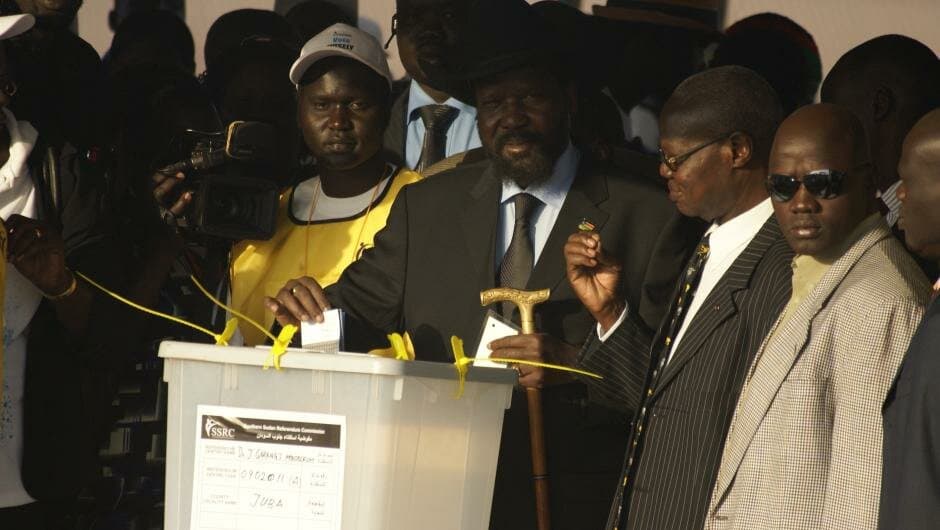
The elections scheduled for 22 December 2026 present both an opportunity and a responsibility. An election is not simply a date on a calendar; it requires preparation, participation, security, civic space, functioning electoral institutions, and mechanisms for resolving disputes.
The African Union has emphasised the importance of political consensus, inclusivity, civic space, citizen security and effective dispute-resolution mechanisms in South Sudan. The essential questions go beyond whether elections will take place: Can political parties compete peacefully? Can citizens participate without fear? Can candidates campaign peacefully? Can electoral institutions function effectively? Can security institutions protect citizens and the process? Can disputes go to lawful institutions rather than the streets or the battlefield? Can political actors accept lawful outcomes while using constitutional mechanisms to raise genuine grievances? These questions require honest answers.
There can be no meaningful democracy where citizens are afraid. Security arrangements must protect citizens, candidates, political parties, electoral personnel, polling centres and election materials, and security institutions must, in turn, operate according to law. Security should protect the Republic and its citizens, not become an instrument of political competition.
Political parties, too, bear responsibilities. They must instruct supporters to reject violence, discourage inflammatory rhetoric, respect the law, and accept that political competition does not make a fellow South Sudanese an enemy.
Whatever disagreements exist about the implementation, continuation, modification or eventual transition of the R-ARCSS, its central purpose must remain the preservation of peace. The agreement should not become a permanent source of political confrontation. Its achievements must be protected, its unfinished business addressed, its shortcomings learned from, and its lessons folded into a stronger constitutional and democratic order. The question is not who won the argument about the R-ARCSS, but what political and constitutional arrangements can prevent South Sudan from returning to war. That is the national question.
The Past as Teacher, Dialogue as the Way Forward
The past cannot be changed. The wars have happened. The lives lost cannot be recovered. The mistakes of past leaders cannot be erased. But the past can become a teacher. It should teach us, not imprison us. The present is our responsibility; the future belongs to our children.
South Sudan’s young people should not inherit the political disputes of previous generations as permanent conflicts. They deserve a country where elections, not armed rebellion, are the means of political competition, where disagreements are settled through parliament, courts, political parties and peaceful dialogue, and where the security of citizens matters more than the ambitions of individuals.
Dialogue is sometimes mistaken for surrender. It is not. Dialogue is the peaceful method through which people with different positions seek common ground. A strong leader can listen to an opponent without becoming an enemy. A mature political system allows disagreement without producing violence. That is why the September dialogue should be treated as an opportunity, not another political battlefield.
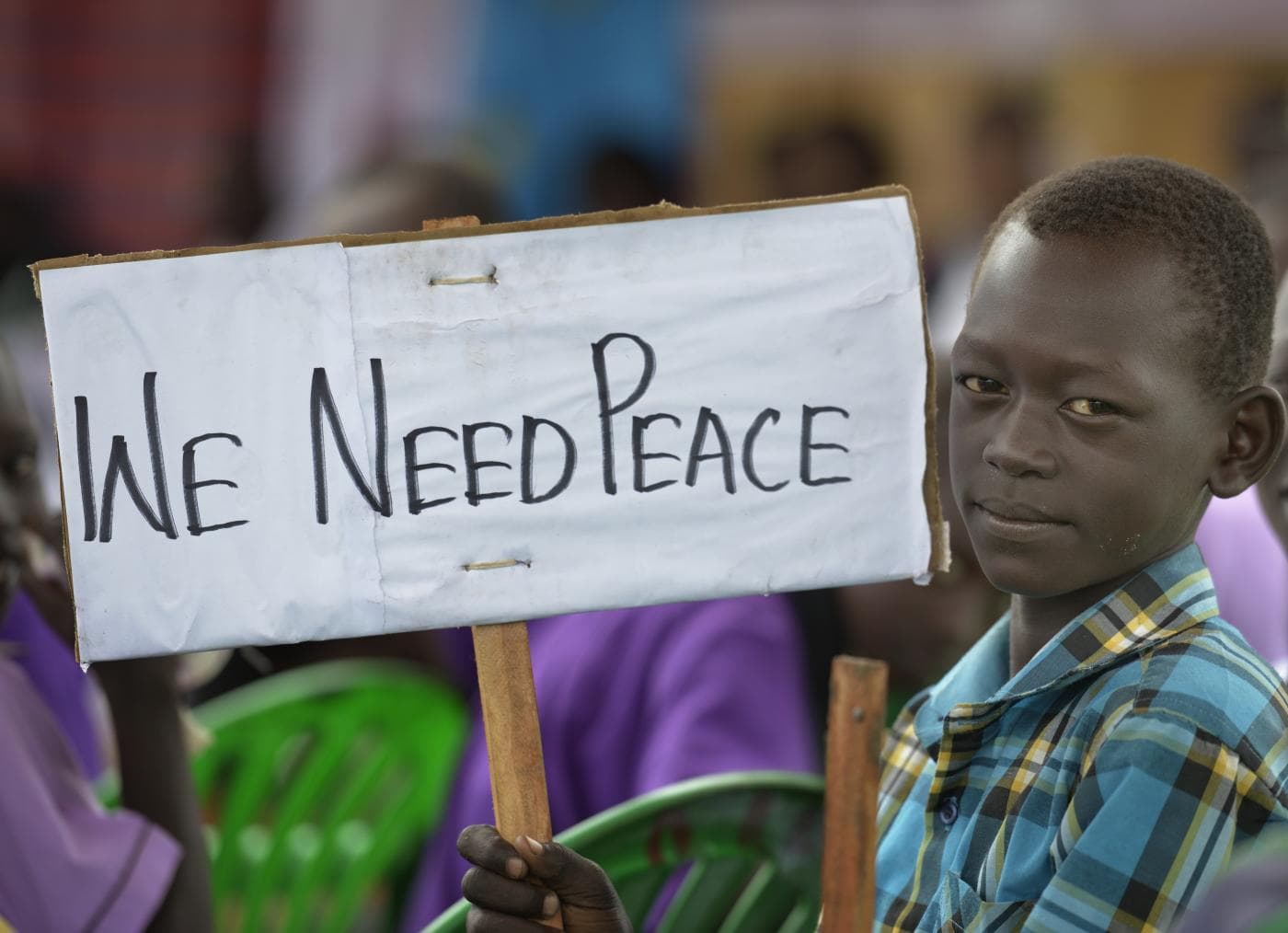
I return to the classroom where Mr. Mark Atem read us that difficult English sentence. At first we did not understand it. But we learned. We improved. Eventually, what once seemed impossible became understandable. South Sudan, too, is learning: the language of constitutional democracy, of peaceful political competition, of accountability, of national security under civilian constitutional authority. And it is learning the most important language of all, the language of peace. Peace does not mean everyone agrees. Peace means that disagreement does not become war.
The September dialogue comes at a critical moment, an opportunity for political parties and stakeholders to show that South Sudan can manage its differences peacefully, to strengthen confidence in the democratic process, to address security concerns, and to place the national interest above political anger.
We cannot rewrite yesterday, but we can write tomorrow differently. The Republic of South Sudan must come first. Peace must come first. The people must come first. Democracy must become the peaceful bridge from the South Sudan of war to the South Sudan of a stable, constitutional future.