
Critics versus Supporters of the December 2026 Elections in South Sudan: Why the Democratic Transition Must Proceed
The Republic of South Sudan stands at a critical crossroads in its political history.


Introduction: A Nation at a Political Crossroads
The Republic of South Sudan stands at a critical crossroads in its political history. The general elections scheduled for December 2026 represent an important opportunity to move beyond prolonged transitional arrangements towards constitutional governance, democratic accountability, institutional stability and sustainable economic development.
However, the proposed elections have generated disagreement among political parties, opposition leaders, political activists and other stakeholders. While registered political parties operating inside the country support proceeding towards elections, elements of the opposition associated with the acting leadership of the SPLM-IO under Nathaniel Oyet, activists representing Dr. Riek Machar, and other political groups have expressed opposition to, or reservations about, the proposed electoral process.
The holdout opposition under General Pagan Amum also raises important questions about the relationship between political negotiations, demands for a new transitional arrangement, and proposals to remove the existing government through force. These differences reveal a fundamental question: Can South Sudan overcome its political crisis through another cycle of transitional agreements, or must the country begin building a legitimate democratic government through elections and constitutional reform?
In my view, elections should proceed as the principal route towards democratic transition, provided that the necessary political, legal and security conditions are established. Elections alone cannot solve every national problem, but an indefinite postponement of elections risks perpetuating the very transitional system that has failed to deliver lasting peace and institutional stability.
The Opposition to Elections and the Search for Political Alternatives
Opposition to the December 2026 elections requires serious consideration. Political parties and movements may have legitimate concerns about insecurity, restricted political space, inadequate electoral preparations, the independence of electoral institutions, and whether the results will genuinely reflect the will of the people.
Such concerns should not automatically be dismissed as opposition to democracy. On the contrary, they must be addressed through dialogue, legal safeguards and practical reforms. Nevertheless, those who oppose elections must also present a credible alternative capable of leading the country towards peace, accountable government and constitutional order.
If political leaders reject elections but cannot agree on a realistic, peaceful and time-bound alternative, the country risks returning to an endless cycle of transitional governments and negotiations among political elites.
Similarly, if any political movement believes that the national crisis can be resolved only by removing the government through armed force, it must consider the human consequences of such an approach. South Sudan has already suffered enormously from successive episodes of political and military violence. Another war would deepen displacement, destroy livelihoods, weaken national institutions and impose additional suffering on ordinary citizens.
The removal of one political leadership through violence does not automatically produce democracy, justice or peace.
Political change should instead be pursued through peaceful dialogue, elections, constitutional processes and the rule of law. Opposition parties have an indispensable role in a democracy, but that role should be exercised through organised political competition rather than renewed armed confrontation.
The Holdout Opposition and the Dilemma of Another Transitional Agreement
The position of the holdout opposition, including political actors under Pagan Amum, raises another important question about the future of South Sudan: Should the country seek another transitional political agreement, establish another interim government, or proceed towards elections under an agreed legal and political framework?
Negotiations are not inherently wrong. Indeed, dialogue is indispensable whenever political disagreements threaten national peace. However, negotiations become counterproductive when they repeatedly postpone the establishment of permanent and accountable institutions.
South Sudan has already experienced several peace initiatives and transitional arrangements. Each was expected to resolve the political crisis, restore stability and prepare the country for democratic governance. Yet repeated extensions of transitional arrangements have weakened public confidence and prolonged uncertainty.
A new agreement, without a clear timetable, enforceable obligations and a credible exit from transitional government, could reproduce the same problems.
The question, therefore, is not whether political leaders should negotiate. They must negotiate where necessary. The question is whether negotiations should continue indefinitely without allowing citizens to exercise their constitutional right to choose their leaders.
The country needs a political process that brings negotiations to a clear and lawful conclusion, rather than another agreement that simply postpones the democratic mandate.
Political Activism, Social Media and the National Interest
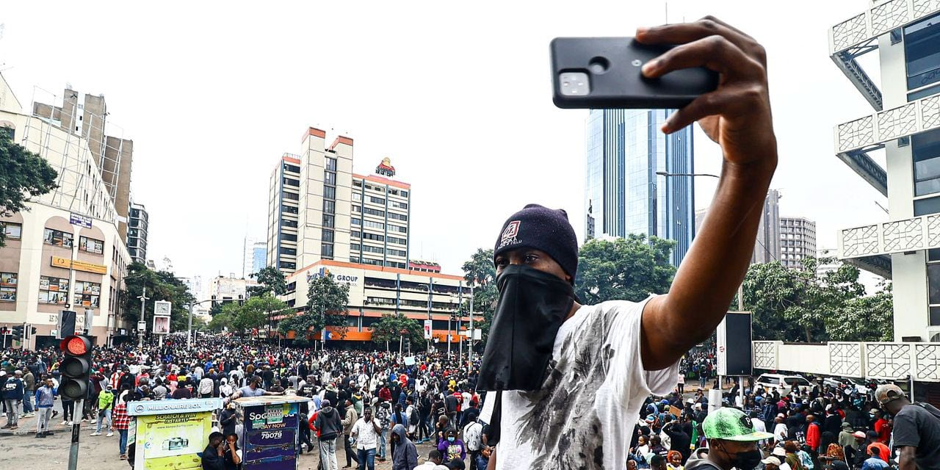
Social media has become an influential arena for political debate in South Sudan. It provides citizens, intellectuals, journalists, activists and political leaders with opportunities to express their opinions and hold public officials accountable.
However, political communication can also become destructive when misinformation, personal attacks, inflammatory language and deliberate manipulation replace reasoned debate.
Some political commentators appear more interested in defending personal interests, promoting particular leaders or discrediting their opponents than in finding practical solutions to the national crisis. Such conduct deserves criticism, regardless of the political camp from which it originates.
Nevertheless, criticism must be based on evidence. Not every opponent of elections is an enemy of peace, and not every supporter of elections is necessarily committed to democratic principles. Political positions should be assessed according to their arguments, conduct and willingness to respect the rights of other citizens.
South Sudan needs a political culture in which people can disagree without becoming enemies, criticise the government without being treated as traitors, and defend the opposition without encouraging violence.
The national interest must take precedence over individual political ambitions. Peace and democracy cannot survive where political competition becomes a struggle for personal survival rather than a contest over public policy and national development.
The Registered Political Parties and the Responsibility to Proceed Towards Elections
The registered political parties that participated in the negotiations leading to the Revitalised Agreement on the Resolution of the Conflict in the Republic of South Sudan (R-ARCSS), signed on 12 September 2018, carry a particular responsibility for the transition they helped establish. The agreement provided the framework for the Revitalised Transitional Government of National Unity (R-TGoNU), which was formed in 2020. That transitional arrangement subsequently reached another critical political turning point in September 2026.
The participating political parties must now demonstrate that the transitional process can lead to a credible electoral mandate rather than another indefinite extension of elite power-sharing.
Their support for elections is important, but it must be accompanied by practical commitments. Citizens need assurances that electoral competition will be peaceful, political parties will have reasonable opportunities to organise and campaign, voters will be registered fairly, and the electoral administration will operate impartially.
The government and electoral institutions must also address concerns relating to security, access to information, freedom of expression, political association, the counting of votes, dispute resolution and the acceptance of legitimate results.
Political parties should not treat elections merely as a procedure for obtaining public office. They should regard them as a national responsibility to establish a government whose authority derives from the people.
The credibility of the December elections will depend not only on whether they take place, but also on whether citizens can participate meaningfully and whether the process commands sufficient public confidence.
The African Union and the Responsibility for a Clear Roadmap
The African Union (AU), working with IGAD, the United Nations (UN) and other relevant partners, has an important responsibility to support peace and constitutional governance in South Sudan.
However, international and regional mediation must provide clarity regarding the relationship between the implementation of the R-ARCSS, the proposed elections and the country's longer-term constitutional future.
Uncertainty over the roadmap can encourage competing political interpretations, undermine public confidence and create opportunities for further political confrontation.
The AU should therefore support a clear, inclusive and time-bound process that addresses legitimate concerns about the elections without allowing disagreements to become an excuse for indefinite transitional rule.
Regional and international partners should encourage peaceful political competition, respect for South Sudan's sovereignty, protection of fundamental rights and compliance with applicable legal obligations.
Their role should be to facilitate a credible national process, not to substitute external preferences for the democratic choices of South Sudanese citizens.
At the same time, South Sudanese political leaders must accept primary responsibility for resolving their own differences. International mediation can assist the country, but it cannot replace national political will.
The Lessons of the 2015 and 2018 Peace Agreements
South Sudan's experience with transitional peace agreements offers important lessons.
The August 2015 Agreement on the Resolution of the Conflict in the Republic of South Sudan was followed by renewed violence in July 2016. That failure demonstrated that signing an agreement does not necessarily resolve the political disagreements, mistrust and institutional weaknesses that produced the conflict.
The subsequent R-ARCSS, signed on 12 September 2018, created another framework for ending the conflict and establishing a transitional government. It brought former adversaries into a shared political arrangement and provided mechanisms for security arrangements, governance reforms, constitutional development and elections.
Nevertheless, implementation of the agreement has faced serious challenges. One fundamental concern has been the difficulty of establishing a unified national security structure while former belligerents retain separate military loyalties and command arrangements.
A country cannot achieve durable peace if its national security institutions remain vulnerable to competing political and military authorities.
South Sudan needs one sovereign state, one constitutional order, one national judiciary operating independently, and unified national security institutions accountable under the law.
Political inclusion is important, particularly after conflict. However, power-sharing must ultimately strengthen the state rather than institutionalise rival centres of authority.
The existence of several armed formations associated with competing political leaders within a transitional framework raises serious questions about national sovereignty, command responsibility and the long-term viability of the state.
Security-sector reform must therefore be pursued in accordance with the peace agreement and applicable law, with the objective of establishing professional, unified and nationally accountable forces.
The lesson is not that every peace agreement is necessarily misguided. Rather, peace agreements must lead to functioning institutions, public accountability and a constitutional settlement.
South Sudan should not remain permanently governed by arrangements designed primarily to accommodate former belligerents.
Elections as a Turning Point, Not a Complete Solution
The December 2026 elections could provide an important turning point in South Sudan's political development.
For the first time in the country's independent history, the electoral process offers an opportunity to move beyond repeated transitional arrangements and towards a government seeking a direct democratic mandate.
However, it would be unrealistic to suggest that elections alone will immediately resolve insecurity, economic hardship, corruption, ethnic tensions or political mistrust.
Elections are a beginning, not the end of national transformation.
Their value lies in establishing a legitimate political process through which citizens can choose their representatives, replace leaders peacefully, hold public officials accountable and influence national policy.
If the elections are conducted credibly, they can help establish a stronger executive, a representative legislature and the political conditions necessary for constitutional reform.
If the process is seriously flawed, however, it could deepen political divisions and undermine public confidence. That is precisely why the government, opposition parties, electoral institutions and international partners must work towards the strongest possible safeguards before, during and after the vote.
The choice is not between pretending that every electoral condition is perfect and abandoning elections altogether. The responsibility is to address shortcomings through practical measures and proceed in a manner consistent with the country's legal framework and democratic obligations.
Reviewing the R-ARCSS After the Elections
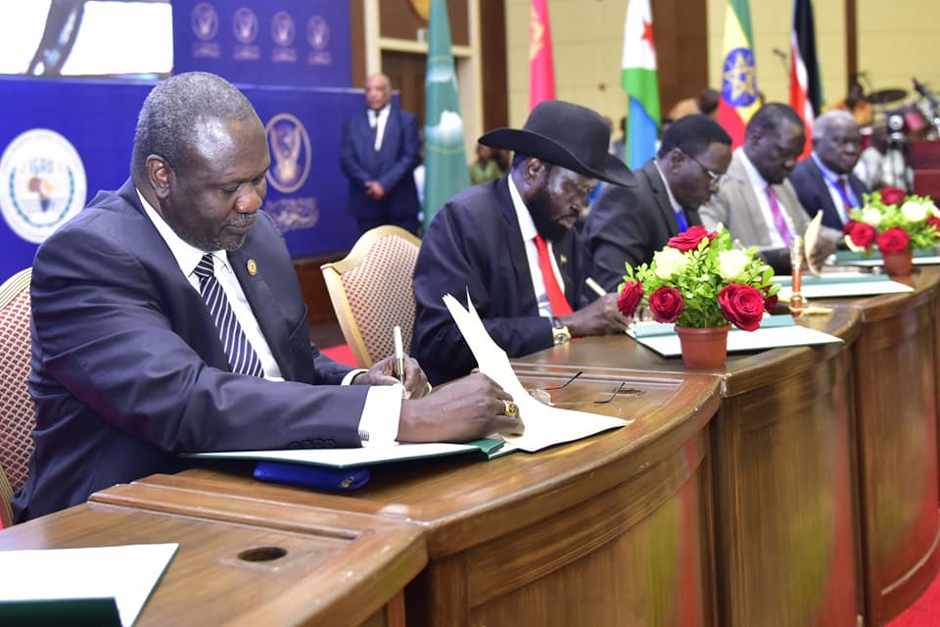
I maintain that the R-ARCSS should undergo a comprehensive, inclusive and legally grounded review following the elections, with the participation of relevant political parties and other national stakeholders.
The purpose should not be to discard the peace agreement's achievements or disregard the interests of those who signed it. Rather, the objective should be to identify provisions that have become ineffective, clarify unresolved obligations and establish a more sustainable framework for democratic governance.
The review should address the relationship between power-sharing and electoral representation, the unification of national security institutions, judicial independence, accountability for public resources, decentralisation, the division of powers between national and subnational governments, and the preparation of a permanent constitution.
It should also examine how transitional commitments can be converted into enforceable constitutional and legal institutions.
The R-ARCSS was negotiated under the extraordinary circumstances of armed conflict and political mistrust. Its historical context must be understood. Nevertheless, no transitional agreement should be treated as permanently beyond examination when its implementation reveals serious institutional weaknesses.
Any review must respect the agreement's applicable legal provisions and the country's constitutional and legal framework. It should not create another prolonged transitional arrangement or become an opportunity for political leaders to renegotiate their positions indefinitely.
The ultimate objective must be to move from a peace agreement among political elites to a constitutional order belonging to the people of South Sudan.
A Permanent Constitution: The Foundation of Democracy, Equality and Justice
A permanent constitution is indispensable to South Sudan's future.
The country needs a constitution that establishes the legitimate sources of public authority, defines the powers and responsibilities of the executive, legislature and judiciary, protects fundamental rights, and provides peaceful mechanisms for resolving political disputes.
Such a constitution should guarantee equality before the law, freedom of expression, freedom of association, political pluralism, independent justice and the right of citizens to participate in public affairs.
It should also establish clear procedures for elections, the peaceful transfer of power, decentralisation, public financial accountability and the constitutional protection of national unity and territorial integrity.
The constitution-making process must be inclusive. Women, young people, traditional leaders, civil society organisations, political parties, professional groups and communities across the country must have meaningful opportunities to contribute.
No political party, ethnic community, armed movement or individual leader should claim exclusive ownership of the constitution.
The constitution must belong to all South Sudanese citizens, regardless of political affiliation, ethnicity, religion, gender or geographical origin.
A permanent constitution should not merely distribute power among political elites. It must regulate power, limit arbitrary authority and protect citizens against abuses by those entrusted with public office.
Democracy becomes meaningful when the law governs both leaders and citizens, and when public institutions remain stronger than the personal ambitions of individuals.
Peace, the Rule of Law and Economic Development
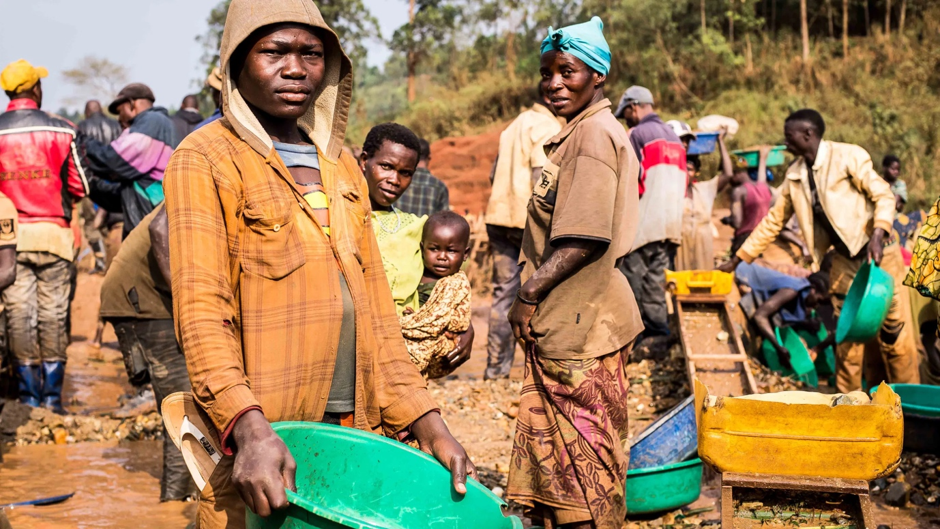
Investors, traders, farmers, public servants and ordinary families require a predictable environment in which property is protected, contracts are respected, public resources are managed responsibly and disputes are resolved through lawful institutions.
Prolonged political uncertainty discourages investment, weakens public administration and diverts national resources away from education, healthcare, roads, agriculture and essential public services.
A government with a credible democratic mandate would have an opportunity to pursue economic reforms, improve public financial management, strengthen anti-corruption institutions and establish clearer national development priorities.
However, electoral legitimacy must be matched by responsible governance.
Winning an election does not provide permission to disregard the law, marginalise political opponents or misuse public resources. The next government must recognise that national resources belong to the people and that public office is a responsibility rather than a personal entitlement.
The opposition, for its part, must recognise that its constitutional role does not end when elections are held. A democratic opposition must remain free to scrutinise government decisions, expose wrongdoing, propose alternative policies and compete in future elections.
Peaceful competition, institutional accountability and economic opportunity must reinforce one another if South Sudan is to achieve sustainable development.
A National Appeal to Political Leaders and Citizens
As South Sudan approaches the December 2026 elections, I appeal to the government, registered political parties, opposition movements, civil society, religious leaders, youth, women and the wider public to place the national interest above political rivalries.
The government must create the conditions necessary for meaningful political participation and credible elections.
Opposition leaders must present peaceful and practical alternatives.
Electoral institutions must act impartially.
The judiciary must remain independent within the constitutional and legal framework.
Regional and international partners must support an inclusive and credible process.
Political activists and social media commentators should also recognise their responsibility to the nation. Public debate should be guided by evidence, reason and respect for human dignity rather than misinformation, hatred or incitement.
South Sudanese citizens should not be forced to choose between peace without democracy and political competition without peace. The country needs both.
Those who disagree about the timing or conditions of the elections should continue to engage in peaceful dialogue, pursue lawful remedies and seek practical solutions.
The objective must be to prevent violence while protecting the right of citizens to choose their leaders.
The future of the country cannot be secured by the permanent exclusion of political opponents, nor can it be secured by endlessly postponing democratic accountability.
Conclusion: From Transitional Politics to Constitutional Government
The December 2026 elections represent an important opportunity to begin a new chapter in the political history of the Republic of South Sudan.
The country cannot continue indefinitely under transitional arrangements whose primary purpose is to accommodate competing political and military elites.
The time has come to strengthen national institutions, establish a credible democratic mandate and move towards a permanent constitution founded on equality, justice, national unity and the rule of law.
Elections must be conducted with the strongest possible guarantees of credibility, freedom, fairness, transparency and security.
Legitimate concerns must be addressed seriously, and political disagreements must be resolved peacefully. No electoral process should become a pretext for renewed violence, exclusion or arbitrary rule.
Following the elections, an inclusive review of the R-ARCSS should help consolidate peace, complete essential institutional reforms and establish a clear path towards a permanent constitutional order.
The government that emerges from the electoral process must be accountable to the people. The legislature must represent citizens rather than merely accommodate political elites. The judiciary must administer justice independently. The national security institutions must serve the country rather than individual political interests.
Above all, South Sudan needs a political culture in which leadership changes through lawful democratic processes, disagreements are resolved through dialogue, and national resources are used for the common good.
The choice before South Sudan is whether to remain trapped in the politics of transitional agreements or to begin building a democratic state governed by a permanent constitution and accountable institutions.
In my considered view, the way forward is to pursue credible elections, strengthen the rule of law, review the R-ARCSS responsibly and establish a permanent constitutional settlement that protects peace, democracy, equality and justice.
The ultimate goal is not simply to elect a president or a parliament. It is to build a country in which future generations of South Sudanese can live in peace, exercise their democratic rights, enjoy equal protection under the law and pursue economic prosperity without fear of another civil war.
Peace must become the foundation of democracy, democracy must become the foundation of legitimate government, and the Constitution must be the ultimate foundation of democratic governance.